Introduction to GRC Material
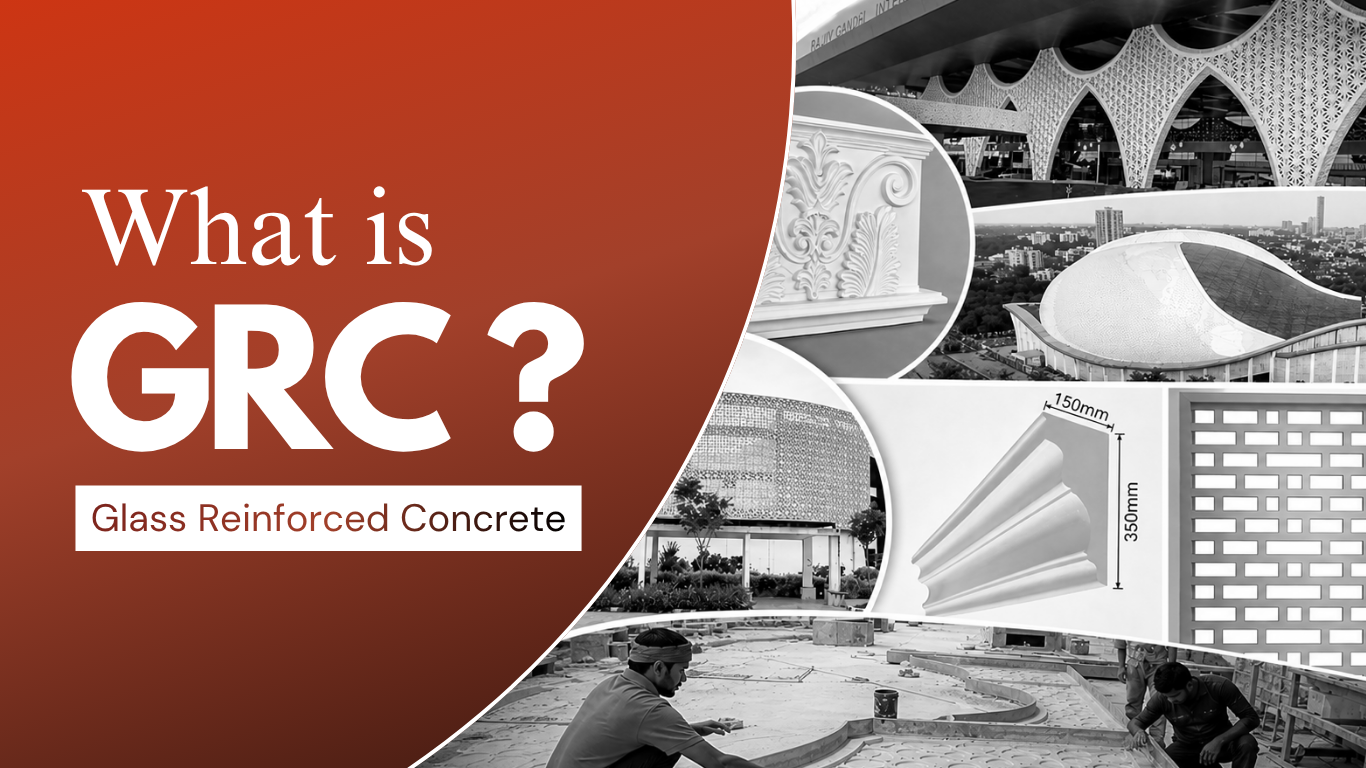
Glass Reinforced Concrete (GRC), also known as GFRC (Glass Fiber Reinforced Concrete), is an advanced composite construction material made from cement, fine aggregates, water, polymers, admixtures, and alkali-resistant glass fibers. The inclusion of glass fibers significantly improves the strength, flexibility, durability, and overall performance of conventional concrete.
At Unistone, we specialize in premium-quality GRC manufacturing and architectural façade solutions for modern construction projects across India. Our innovative GRC systems are widely used in façades, cladding, decorative architectural elements, landscape products, and customized design applications.
GRC has become one of the most preferred materials in contemporary architecture because it offers:
- Lightweight performance
- High flexural strength
- Excellent durability
- Superior weather resistance
- Fire resistance
- Design flexibility
- Long service life
- Premium architectural aesthetics
What Makes GRC Different from Traditional Concrete?
Traditional concrete is known primarily for its compressive strength but is heavy and limited in design flexibility. GRC, however, combines concrete with alkali-resistant glass fibers, resulting in a material that is:
- Lighter than precast concrete
- Stronger in flexural performance
- Easier to install
- More versatile in shapes and textures
- More suitable for architectural applications
Unlike traditional concrete, GRC is classified based on its Modulus of Rupture (MOR) or flexural strength, making it ideal for lightweight façade systems and decorative architectural designs.
Composition of GRC Material
A standard GRC mix typically includes:
| Component | Purpose |
|---|---|
| Cement | Main binding material |
| Fine Sand / Aggregate | Structural body |
| Water | Cement hydration |
| Glass Fibers | Reinforcement and tensile strength |
| Polymer | Improves bonding and durability |
| Plasticizers / Admixtures | Enhance workability |
The most important ingredient is the alkali-resistant glass fiber, which gives GRC its exceptional crack resistance and structural performance.
Key Features and Benefits of GRC
1. Lightweight Construction Material
GRC panels are significantly lighter than conventional concrete, helping reduce:
- Structural load
- Foundation stress
- Transportation costs
- Installation time
This makes GRC highly suitable for high-rise buildings and modern façade systems.
2. Exceptional Strength and Durability
Despite being lightweight, GRC provides:
- High flexural strength
- Excellent impact resistance
- Superior crack resistance
- Long-term durability
- Weather protection
GRC performs exceptionally well under harsh environmental conditions including:
- Rain
- UV exposure
- Heat
- Coastal climates
- Freeze-thaw cycles
3. Superior Design Flexibility
One of the biggest advantages of GRC is its ability to create:
- Curved surfaces
- Decorative facades
- Intricate textures
- Geometric patterns
- Custom architectural elements
GRC can replicate natural materials such as:
- Stone
- Marble
- Wood
- Sandstone
- Exposed concrete finishes
while maintaining lightweight performance.
4. Fire Resistance
GRC is a non-combustible material with excellent fire-resistant properties, making it ideal for modern commercial and residential projects.
5. Sustainable Building Material
GRC contributes to environmentally responsible construction by reducing:
- Material usage
- Structural steel requirements
- Transportation energy
- Long-term maintenance costs
Types of GRC Manufacturing Methods
Spray GRC Method
Spray GRC is considered the highest-performance manufacturing process.
Spray GRC Manufacturing Process
- Water, polymer, and admixtures are mixed in a high-shear mixer.
- Cement and sand are slowly added to create a smooth slurry.
- The slurry is transferred to a spray unit.
- Glass fiber roving is chopped at the spray gun.
- Fibers and slurry are sprayed simultaneously onto molds.
- Thin layers are compacted using rollers.
- The product is cured under controlled moisture conditions.
Advantages of Spray GRC
- Higher strength
- Better fiber distribution
- Superior durability
- Excellent structural performance
- Ideal for large façade panels
Typical spray GRC thickness ranges from 10–15 mm.
Premix GRC Method
In the premix method, chopped glass fibers are mixed directly into the slurry before casting.
Premix GRC Manufacturing Process
- Cement and sand are dry mixed.
- Water, polymer, and admixtures are added.
- Chopped glass fibers are slowly introduced.
- The mix is poured into molds.
- Vibrating tables compact the material.
- Products are covered to prevent moisture loss.
- Units cure for approximately 7 days.
Advantages of Premix GRC
- Easier manufacturing process
- Cost-effective production
- Suitable for decorative products
- Ideal for smaller architectural elements
GRC Technical Specifications
Typical GRC Formulation
| Components | Spray GRC | Premix GRC |
|---|---|---|
| Cement | 50 kg | 50 kg |
| Fine Aggregate | 50 kg | 50 kg |
| Glass Fiber | 4.5–5% | 2–3.5% |
| Plasticizer | 0.5 kg | 0.5 kg |
| Polymer | 5 kg | 5 kg |
| Water | 13.5 Litres | 14.5 Litres |
Mechanical Properties of GRC
| Property | Spray GRC | Premix GRC |
|---|---|---|
| Ultimate Strength (MOR) | 20–30 MPa | 10–14 MPa |
| Elastic Limit | 7–11 MPa | 5–8 MPa |
| Interlaminar Strength | 3–5 MPa | NA |
| In-Plane Strength | 8–11 MPa | 4–7 MPa |
| Compressive Strength | 50–80 MPa | 40–60 MPa |
| Impact Strength | 10–25 kJ/m² | 10–15 kJ/m² |
| Elastic Modulus | 10–20 GPa | 10 GPa |
| Strain to Failure | 0.6–1.2% | 0.1–0.2% |
| Dry Density | 1.9–2.1 t/m³ | 1.8–2.0 t/m³ |
Applications of GRC Material
GRC is widely used in modern architecture and construction because of its flexibility and performance.
Exterior Applications
- Building facades
- Exterior cladding systems
- Decorative screens
- Cornices and moldings
- Balcony panels
- Architectural fins
- Parapets
- Sun breakers
Interior Applications
- Decorative wall panels
- Ceiling designs
- Feature walls
- Customized architectural detailing
Landscaping Applications
- Garden planters
- Outdoor furniture
- Water features
- Decorative structures
- Landscape sculptures
Why Architects and Builders Prefer GRC
Architects and developers choose GRC because it combines:
- Lightweight installation
- Modern aesthetics
- Long-term durability
- Faster project execution
- Lower structural load
- Minimal maintenance
- Unlimited design possibilities
GRC enables the creation of iconic architectural structures while maintaining structural efficiency.
GRC vs Traditional Concrete
| Feature | GRC | Traditional Concrete |
|---|---|---|
| Weight | Lightweight | Heavy |
| Flexural Strength | High | Lower |
| Design Flexibility | Excellent | Limited |
| Installation | Faster | Slower |
| Durability | Excellent | Moderate |
| Maintenance | Low | Moderate |
| Architectural Detailing | Highly Detailed | Limited |
GRC Curing Process
Proper curing is essential for achieving maximum strength and durability in GRC products.
Common curing methods include:
- Moist curing under polythene sheets
- Polymer curing compounds
- Controlled humidity curing
The standard curing period is approximately 7 days.
Proper curing improves:
- Strength development
- Surface quality
- Durability
- Long-term performance
About Unistone GRC
At Unistone, we are proud to be among India’s leading pioneers in Glass Reinforced Concrete (GRC) manufacturing and architectural façade solutions. Since introducing advanced GRC systems to the Indian construction industry, Unistone has transformed modern architecture through innovative design, precision engineering, and premium manufacturing standards.
Our expertise in customized GRC products, façade systems, cladding solutions, architectural moldings, screens, columns, cornices, and decorative elements has helped architects, builders, and developers create visually striking and structurally efficient projects across India.
Unistone combines advanced production technology with skilled craftsmanship to deliver lightweight, durable, weather-resistant, and aesthetically superior GRC products suitable for:
- Residential projects
- Commercial developments
- Hospitality projects
- Educational institutions
- Healthcare infrastructure
- Government buildings
Our solutions are trusted in landmark projects including hospitals, hotels, universities, luxury residences, and commercial developments nationwide.
Why Choose Unistone for GRC Solutions?
At Unistone, we focus on:
- Premium quality raw materials
- Advanced manufacturing technology
- Precision engineering
- Skilled craftsmanship
- Customized architectural solutions
- Timely project delivery
- Long-lasting durability
- Complete customer satisfaction
Our GRC products are manufactured according to modern architectural and international quality standards.
Explore Unistone GRC Products
At Unistone, we offer a complete range of premium architectural and façade products for modern construction projects.
Our GRC Product Range Includes:
GRC Facade Panels
Lightweight and durable façade panels designed for modern elevations and architectural cladding systems.
GRC Screens & Jali
Decorative and functional screens that enhance ventilation, sunlight control, and aesthetics.
GRC Columns
Customized architectural columns available in classical and contemporary designs.
GRC Cornices & Moldings
Precision-crafted moldings, trims, and decorative façade details.
GRC Cladding Systems
Advanced cladding solutions that combine durability, aesthetics, and lightweight performance.
GRC Decorative Elements
Custom-made domes, arches, balustrades, window surrounds, and ornamental architectural features.
GRC Stone Cladding
Natural stone-inspired lightweight cladding systems with superior finish and easy installation.
GRC Landscape Products
Outdoor architectural products including planters, benches, paving systems, and water features.
Customized Architectural GRC Solutions
Tailor-made GRC products manufactured according to project-specific architectural requirements.
Landmark Projects by Unistone
Unistone GRC products have been successfully used in prestigious projects across India, including:
- AIIMS Bilaspur
- Hyatt Regency Kasauli
- Max Super Specialty Hospital Mohali
- Adani Samsara Villas Gurgaon
- Crowne Plaza Lucknow
- IIT Bhubaneswar
- Patanjali Yogpeeth
- ESIC Hospital Gurugram
and many more residential, commercial, hospitality, and institutional developments nationwide.
Future of GRC in Modern Architecture
As architecture moves toward lightweight, sustainable, and visually appealing construction systems, GRC continues to gain popularity across:
- Commercial buildings
- Luxury residences
- Hotels and hospitality projects
- Institutional buildings
- Infrastructure developments
Modern architects increasingly use GRC for:
- Smart façade systems
- Sustainable building envelopes
- Innovative architectural expressions
- High-performance cladding solutions
GRC represents the future of advanced architectural construction materials.
Conclusion
Glass Reinforced Concrete (GRC) is one of the most advanced and versatile materials used in modern architecture today. Its lightweight nature, exceptional strength, durability, flexibility, and design possibilities make it ideal for façades, cladding, decorative features, and customized architectural applications.
Whether for commercial buildings, luxury residences, hospitality developments, or landscape architecture, GRC provides outstanding aesthetic and structural advantages.
At Unistone, we deliver innovative and premium-quality GRC solutions tailored to modern architectural requirements and creative design visions.
If you are looking for durable, lightweight, and aesthetically superior GRC products, Unistone is your trusted partner for complete architectural façade and GRC solutions.
Frequently Asked Questions (FAQs)
GRC is commonly used for facades, cladding, decorative panels, architectural mouldings, landscaping products, and customised construction applications.
GRC provides higher flexural strength, better crack resistance, and lighter weight compared to traditional concrete.
GRC offers excellent resistance to moisture and harsh weather conditions when manufactured and installed properly.
Properly manufactured and maintained GRC can last for several decades with minimal maintenance.
Yes. GRC reduces structural load, material consumption, and transportation energy, making it a sustainable construction material.