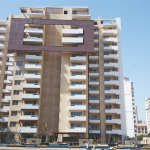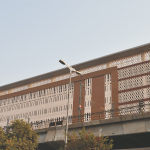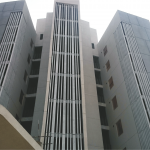
Introduction
For decades, natural stone has been widely used in architecture because of its traditional appearance and premium aesthetic appeal. However, modern construction demands have changed significantly. Today’s architects, builders, and developers require materials that are:
- Lightweight
- Cost-efficient
- Durable
- Easy to install
- Structurally efficient
- Sustainable
- Flexible in design
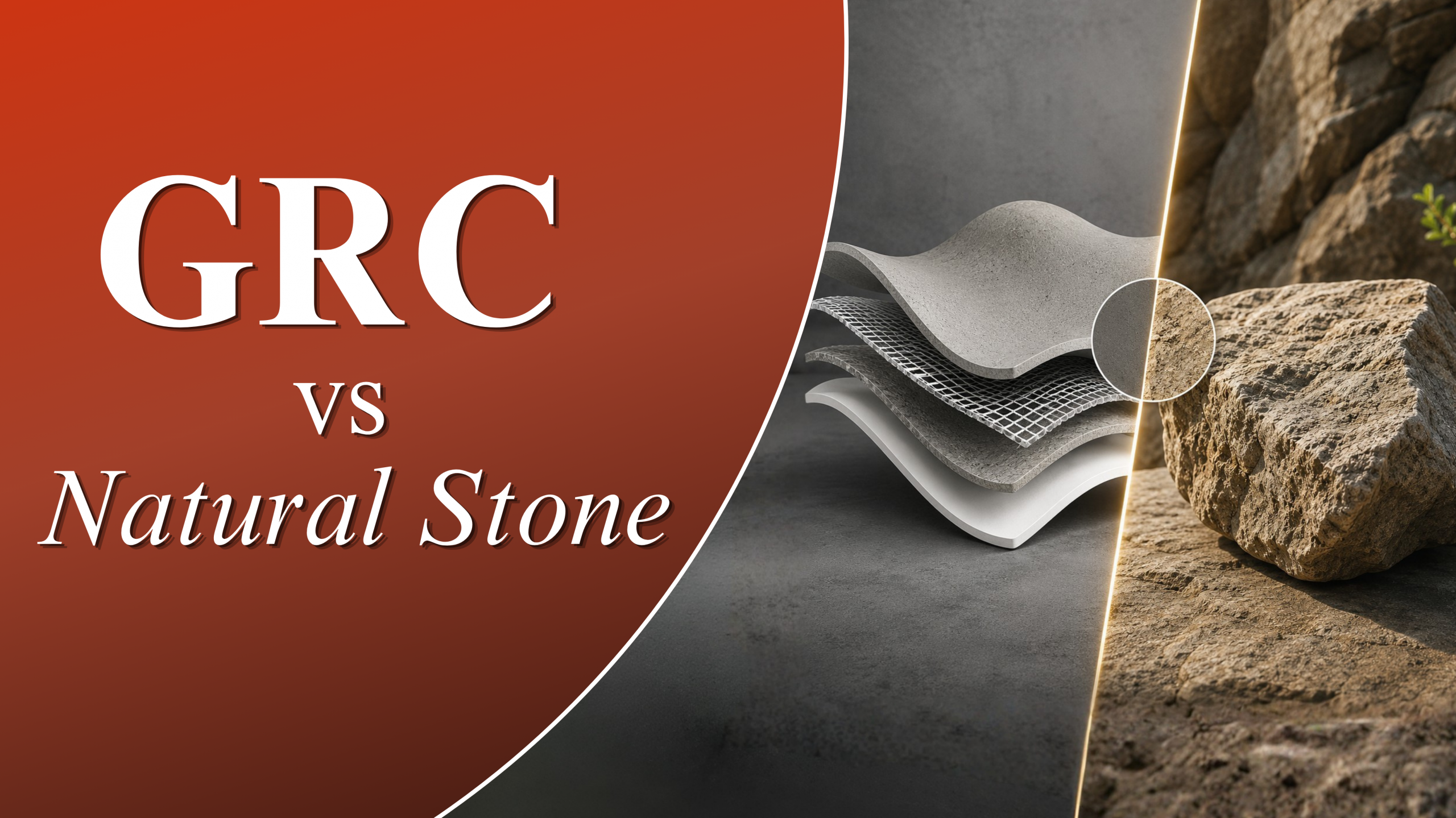
This shift in construction priorities has made Glass Reinforced Concrete (GRC) one of the most preferred alternatives to natural stone in modern architecture.
At Unistone, we specialize in advanced GRC façade systems and architectural solutions that deliver the visual appeal of natural stone while eliminating many of the practical and structural limitations associated with traditional stone cladding.
What is GRC?
Glass Reinforced Concrete (GRC), also known as GFRC (Glass Fiber Reinforced Concrete), is an advanced composite material made using:
- Cement
- Fine aggregates
- Water
- Polymers
- Admixtures
- Alkali-resistant glass fibers
The inclusion of glass fibers significantly improves:
- Flexural strength
- Crack resistance
- Durability
- Lightweight performance
GRC is now widely used for:
- Building facades
- Exterior cladding
- Decorative architectural elements
- Screens and jalis
- Cornices and moldings
- Landscape products
- Customized façade systems
The Problem with Natural Stone in Modern Construction
Although natural stone offers a luxurious appearance, it also comes with several practical challenges that make it less suitable for modern large-scale construction projects.
1. Natural Stone is Extremely Heavy
One of the biggest disadvantages of natural stone is its excessive weight.
Heavy stone panels increase:
- Structural load on buildings
- Foundation requirements
- Steel framework costs
- Transportation expenses
- Installation complexity
For high-rise buildings and modern façade systems, this additional weight becomes a major engineering challenge.
GRC Advantage
GRC panels are significantly lighter than natural stone while still maintaining high strength and durability. Lightweight GRC systems reduce dead load and improve overall structural efficiency.
2. Natural Stone Installation is Slow and Expensive
Stone cladding installation requires:
- Heavy lifting equipment
- Skilled labor
- Complex anchoring systems
- Longer installation time
This increases:
- Labor costs
- Project timelines
- Site handling difficulties
GRC Advantage
GRC panels are lightweight and easy to install, allowing:
- Faster project execution
- Reduced labor cost
- Easier handling
- Lower installation expenses
This makes GRC ideal for modern fast-track construction projects.
3. Natural Stone Has Limited Design Flexibility
Natural stone must be cut from quarry blocks, limiting:
- Complex geometries
- Curved surfaces
- Detailed architectural patterns
- Customized designs
Creating intricate shapes in stone is:
- Expensive
- Time-consuming
- Technically difficult
GRC Advantage
GRC offers unlimited architectural freedom and can be molded into:
- Curves
- Organic forms
- Decorative textures
- Intricate details
- Modern geometric patterns
GRC also replicates the appearance of:
- Marble
- Limestone
- Sandstone
- Granite
- Exposed concrete
without the weight and limitations of real stone.
4. Natural Stone Requires Higher Structural Support
Because natural stone is heavy, buildings often require:
- Additional structural steel
- Stronger support systems
- Reinforced anchoring mechanisms
This increases the overall project cost significantly.
GRC Advantage
GRC reduces structural load, helping developers save on:
- Structural steel
- Foundation work
- Transportation
- Installation systems
This makes GRC a far more economical solution for modern façade engineering.
5. Natural Stone Maintenance Can Be Expensive
Many natural stones are porous and vulnerable to:
- Moisture absorption
- Surface staining
- Cracking
- Weathering
- Discoloration
Stone surfaces often require:
- Sealing
- Polishing
- Regular maintenance
- Surface treatment
GRC Advantage
GRC offers:
- Excellent weather resistance
- Minimal maintenance
- Better long-term performance
- Strong resistance to UV exposure and environmental conditions
Routine cleaning is usually sufficient for maintaining GRC facades.
6. Natural Stone Increases Transportation and Handling Costs
Because stone is extremely heavy:
- Transportation becomes expensive
- Loading and unloading are difficult
- Site handling requires more manpower and machinery
Damage risks during transportation also increase.
GRC Advantage
Lightweight GRC panels reduce:
- Transportation costs
- Handling difficulties
- Installation risk
- Site logistics challenges
7. Quarrying Natural Stone Impacts the Environment
Natural stone extraction involves:
- Quarry blasting
- Land disturbance
- Resource depletion
- High energy consumption
Additionally, transporting heavy stone materials contributes to higher carbon emissions.
GRC Advantage
GRC supports sustainable construction by reducing:
- Structural material usage
- Transportation energy
- Overall project carbon footprint
Modern architecture increasingly favors lightweight and environmentally responsible materials like GRC.
Why Modern Architects Prefer GRC Over Natural Stone
Today’s architects prefer GRC because it delivers:
- The visual appearance of natural stone
- Lightweight engineering
- Faster installation
- Better structural efficiency
- Greater design flexibility
- Lower maintenance
- Cost-effective construction
GRC allows architects to achieve premium aesthetics without compromising engineering efficiency.
This is why GRC has become one of the most widely used materials in:
- Commercial facades
- High-rise buildings
- Hotels
- Hospitals
- Educational institutions
- Luxury residences
- Modern infrastructure projects
GRC vs Natural Stone: Quick Comparison
| Feature | GRC | Natural Stone |
|---|---|---|
| Weight | Lightweight | Extremely Heavy |
| Installation | Fast & Easy | Slow & Complex |
| Structural Load | Low | High |
| Design Flexibility | Excellent | Limited |
| Transportation Cost | Lower | Higher |
| Maintenance | Minimal | Regular Maintenance |
| Structural Support | Less Required | Heavy Reinforcement Needed |
| Sustainability | High | Moderate |
| Cost Efficiency | Better | Expensive |
| Architectural Possibilities | Unlimited | Limited |
Why GRC is the Future of Modern Facade Design
Modern construction is moving toward:
- Lightweight materials
- Faster project completion
- Sustainable architecture
- Smart façade systems
- Cost-efficient engineering
Natural stone, while visually attractive, no longer meets many of these modern performance requirements efficiently.
GRC offers the perfect combination of:
- Beauty
- Engineering performance
- Durability
- Sustainability
- Architectural freedom
making it the preferred material for modern façade systems.
About Unistone GRC Solutions
At Unistone, we are among India’s leading manufacturers of advanced GRC façade systems and architectural products. Our expertise includes:
- GRC facade panels
- GRC cladding systems
- GRC screens and jalis
- Decorative architectural elements
- GRC columns and moldings
- Customized façade solutions
We combine:
- Advanced manufacturing technology
- Precision engineering
- Premium-quality materials
- Modern architectural expertise
to deliver lightweight, durable, and aesthetically superior GRC systems for modern construction projects.
Explore Unistone GRC Products
Our Product Range Includes:
- GRC Facade Panels
- GRC Cladding Systems
- GRC Screens & Jali
- GRC Columns
- GRC Cornices & Mouldings
- GRC Decorative Elements
- GRC Stone Finish Panels
- GRC Landscape Products
- Customised Architectural GRC Solutions
Conclusion
Natural stone comes with major challenges, including:
While natural stone continues to hold traditional appeal, modern architecture demands materials that are lighter, smarter, faster, and more efficient.
- Excessive weight
- High installation cost
- Structural limitations
- Maintenance requirements
- Increased project expenses
GRC successfully overcomes these challenges while still delivering the luxurious appearance of natural materials.
With its:
- Lightweight performance
- Superior flexibility
- Faster installation
- Lower maintenance
- Better sustainability
- Cost efficiency
GRC has become the preferred choice for modern façade systems and architectural projects worldwide.
At Unistone, we provide innovative and premium-quality GRC solutions that combine modern engineering with architectural excellence.
Frequently Asked Questions (FAQs)
Yes. GRC offers lighter weight, easier installation, lower maintenance, greater design flexibility, and better cost efficiency compared to natural stone.
Yes. Modern GRC technology can accurately replicate marble, sandstone, limestone, granite, and other natural stone textures.
Because it combines premium aesthetics with lightweight engineering, sustainability, and faster construction performance.
Yes. GRC reduces transportation, installation, and structural costs, making it more cost-effective for modern projects.
Absolutely. GRC provides excellent weather resistance, crack resistance, and long-term durability.